




Field Notes / Physical Security
Security Guards Walked Out in Baltimore and Amsterdam This Month. Here Is Why That Is Your Cyber Problem.
Every control you bought assumes one thing: that the person at the door stopped whoever should not be inside. That person works for a contractor who won your building on price. In August 2026 those contractors were in dispute on two continents at once. Here is what the labour reporting says about the layer nobody tests.

01 Who is actually striking
ead the employer column rather than the city column. The Baltimore Harbor East officers work for Abacus Security. Their union, 32BJ SEIU, filed seven unfair labour practice charges covering demotions and firings for union activity, threats and coercion, and discriminatory statements. Officers told reporters they work without health care and without support after violent incidents on site Baltimore Fishbowl 2026 .
A separate group of Baltimore officers, employed by city contractor Metropolitan Protective Services, struck on 6 August. The complaints there were heat safety and wages: a pregnant officer allegedly denied her legally required break and water when the heat index reached 104 degrees, and a filing with the Maryland Department of Labor covering more than 250 hours of unpaid or improperly paid overtime, worth close to $9,000 across six employees Baltimore Fishbowl 2026 .
| Employer | Where | August 2026 status |
|---|---|---|
| Abacus Security | Baltimore, Harbor East | Open-ended strike from 21 August |
| Metropolitan Protective Services | Baltimore city sites | Struck 6 August |
| Securitas, I-SEC, Trigion | Schiphol, Amsterdam | Rolling stoppages through late August |
| OCS | National Crime Agency, London | 100% strike vote, suspended 20 August |
At Schiphol the trigger was workload. The airport had reorganised its security department and consolidated onto three firms, and the unions FNV and CNV set an ultimatum that expired at midday on 19 August. Staff then ran short stoppages, five of them on 26 August alone, which added roughly twenty minutes to the average security queue NL Times 2026 .
Be precise about what that did and did not mean. Screening continued. Nobody walked through unchecked. Anyone telling you an airport briefly stopped checking passengers is selling something. The useful detail is quieter: an airport removed contractors from a security operation, the remaining staff said the workload had become unmanageable, and it took an ultimatum to get the conversation.
02 What the pay tells you
The settlements say more than the strikes do. In late 2025, security officers employed by Allied Universal in Philadelphia ratified a contract that lifted the minimum hourly wage from $16.25 to $20.55 over four years, and added three paid holidays. Their union described it as the largest raise for security workers in the local's history Daily Pennsylvanian 2025 . In New Jersey, a four-year agreement with Allied Universal and Securitas carried increases of up to 29.41 per cent for officers on a $17 minimum Campus Safety 2025 .
Read those numbers backwards. A raise that size is historic only when the starting point was low. Before those contracts, the person controlling physical entry to university campuses and Center City high-rises was paid $16.25 an hour. That is the budget line your entire physical security posture rests on, and it was set by whoever won the tender.
This is not an argument about fairness. It is an argument about incentives. Contract security is bought on price. Price competition puts downward pressure on wages, wages drive retention, and retention determines whether the person at your door has been there long enough to know who belongs.
03 What is behind the door
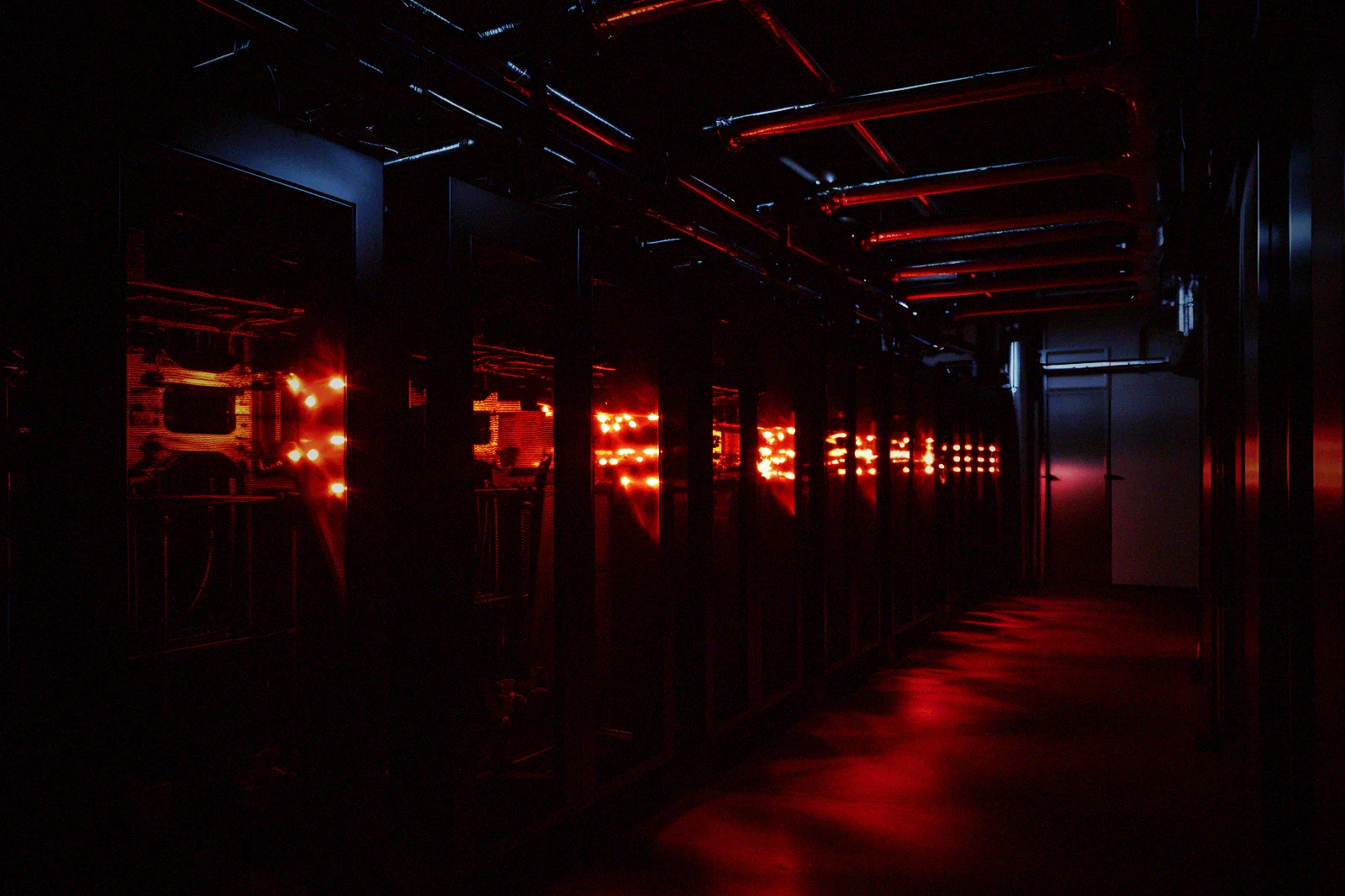
Physical security is usually described as the first layer of defence in depth. Network engineers use "layer 1" to mean something narrower: the physical transmission layer, the cabling and radio and voltages underneath every protocol. Both readings land in the same place, which is the part worth sitting with.
Physical access is how an attacker obtains layer 1 in the engineering sense too. Someone inside your office can reach the network jack in the meeting room nobody books. They can open the comms cupboard that is unlocked because the cleaner needs it. They can reach a fibre run, attach a device behind a desk, photograph a screen, read the note under the keyboard, or pick up an unlocked laptop and leave.
04 The failure mode is churn
A strike day is the least dangerous version of this problem. Everyone knows it is happening, cover is arranged, and attention is high. The risk sits in the ordinary weeks either side.
When a contract is repriced, when a site closes and staff are rehired on hourly terms, when officers leave because the pay finally became intolerable, the building loses something that never appears on an asset register. The guard who knows that the man in the delivery uniform does not normally come on Tuesdays is the actual control. The badge reader only checks whether a card is valid. The person checks whether the situation is.
Three questions follow from that, and most organisations cannot answer any of them. Who re-vets officers when a contract changes hands? What happens to site knowledge when the incumbent team is made redundant and reapplies? And during a dispute, who is actually standing at your reception desk, how were they screened, and how long have they had the site briefing?
Unfamiliar staff at the door is precisely the condition a social engineer wants. A new officer will not challenge a confident stranger who says they are expected on the fourth floor, because a new officer does not yet know that the fourth floor has no visitors on a Tuesday. That is not a criticism of the officer. It is the predictable result of buying the control on price and never testing it.
05 What to test this quarter
You do not need a labour dispute to find out where you stand. You need somebody to try the door, and you need to read your own contract.
Start with the contract, because it is free to read. Find the vetting standard, the notice period, and the clause covering who provides cover during industrial action or a handover. Then find out whether anyone has ever tested entry. Not a fire drill. An attempt, made by someone who is trying to get in, reported honestly afterwards.
The guards in Baltimore, Amsterdam and London are asking their employers for health care, for water in the heat, and for the sick pay they used to have. That is their fight, not ours. But if your security model depends on those people, and every security model does, then their working conditions are a variable in your risk register. Almost nobody has written it down.
References
Sources
- Baltimore Fishbowl. Security officers strike in Harbor East over Unfair Labor Practices. 21 August 2026. baltimorefishbowl.com
- Baltimore Fishbowl. City security officers set to strike over heat and wage violations. August 2026. baltimorefishbowl.com
- DutchNews.nl. Schiphol security staff begin strike action over workload. August 2026. dutchnews.nl
- NL Times. Schiphol security strikes cause waits of up to 25 minutes on Wednesday. 26 August 2026. nltimes.nl
- Public and Commercial Services Union. National Crime Agency members vote for strike action. August 2026. pcs.org.uk
- Public and Commercial Services Union. Security guards at National Crime Agency set to strike. August 2026. pcs.org.uk
- Campus Safety Magazine. New Jersey security officers strike averted with tentative contract agreement. 2025. campussafetymagazine.com
- The Daily Pennsylvanian. Penn security officers ratify contract with Allied Universal. 10 November 2025. thedp.com